▶
Lie on your side, lying on the shoulder of your bottom arm, which is extended forward at a right angle (upper arm perpendicular to your body, forearm pointing up).
 TamaduOpen app
Stretches the shoulder’s internal rotation (posterior capsule) while lying on your side. Popular with overhead athletes to improve shoulder mobility.
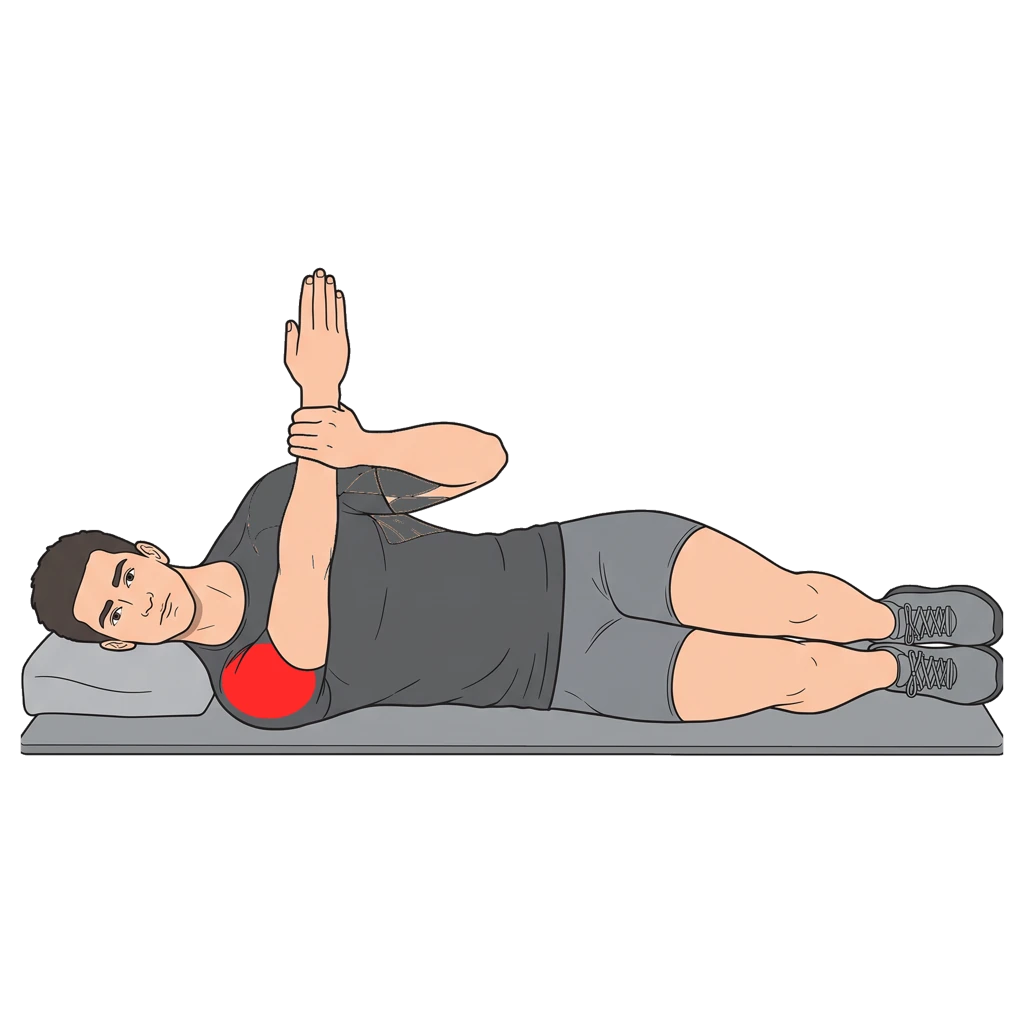
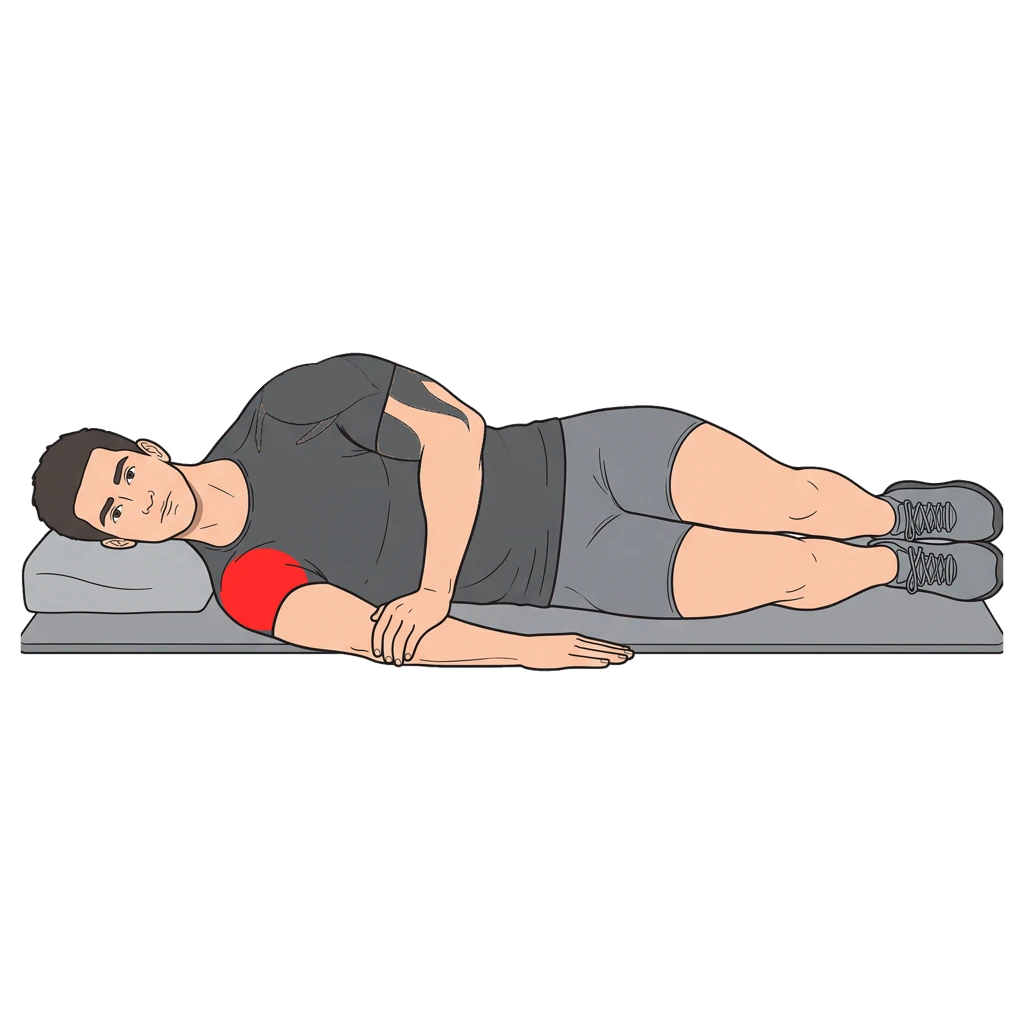
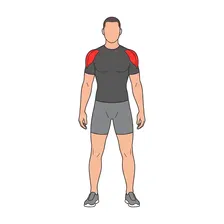
Mainly Rear shoulder. Secondary muscles: Trapezius.
No equipment – your bodyweight is enough.
Yes, without any equipment – your body weight is enough.
Hold the stretch calmly for 20–30 seconds while breathing deeply (no bouncing). It should be noticeable but not painful. Then switch sides.
Yes. The exercise is done one side at a time – train both sides equally.
Mainly in: Rear shoulder.
Pressing too hard (shoulder hurts) – very gently, only to a light stretch. Shoulder rolling forward with it – keep the shoulder blade fixed.
Good for internal rotation in overhead athletes.
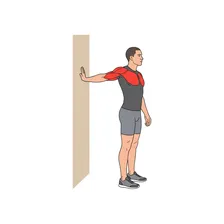
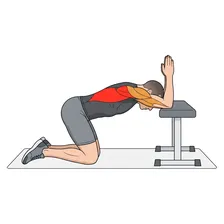
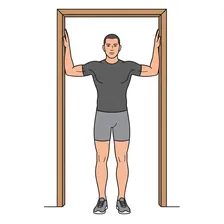
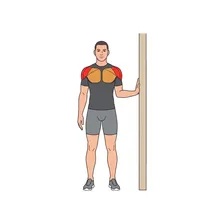
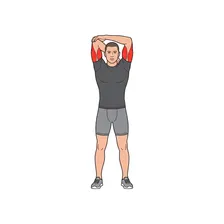
For example: Shoulder stretch · Biceps stretch, standing · Butcher's block stretch.
Train this exercise in Tamadu – with a plan, set tracking and muscle balance, free and without an account.
Train in Tamadu