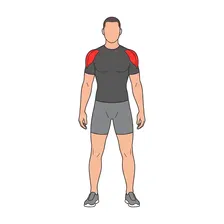
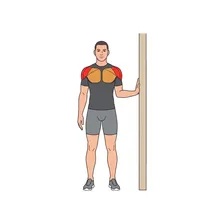
▶
Stand in a doorway and place your forearms on the door frame (elbows at about shoulder height, bent 90°).
 TamaduOpen app
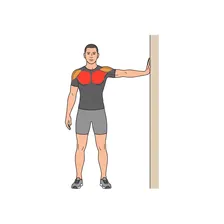
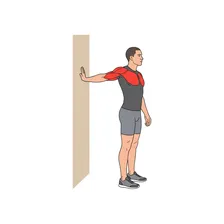
Stretches the pecs and front delts in a door frame. Ideal for counteracting a hunched desk posture.
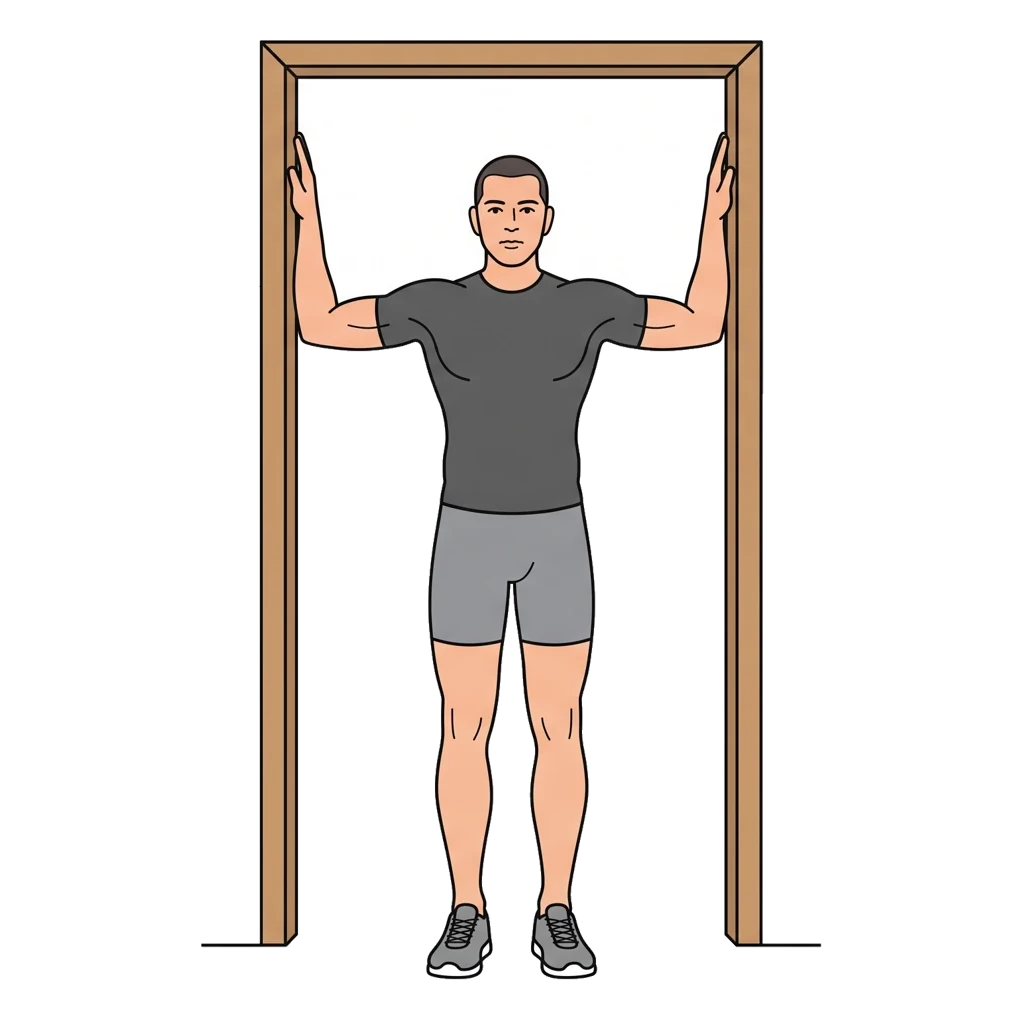
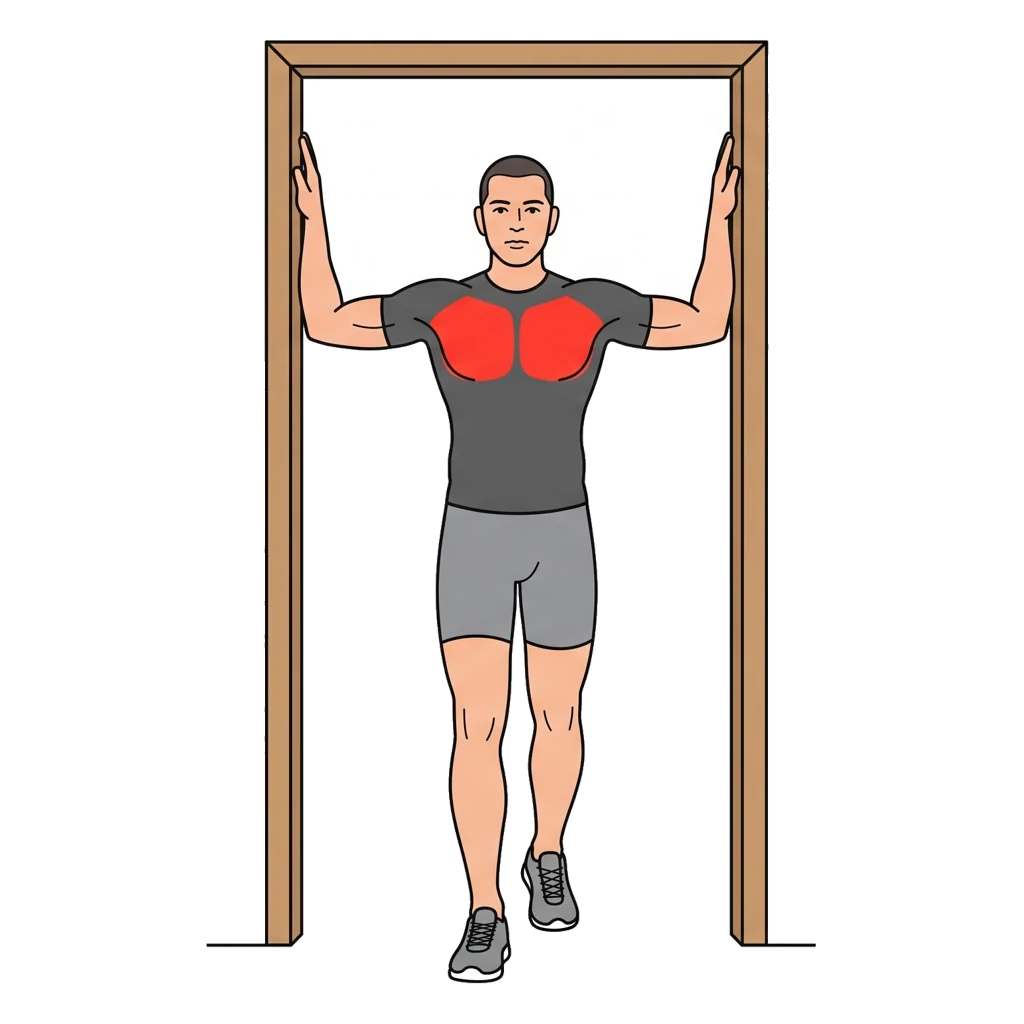
Mainly Chest.
No equipment – your bodyweight is enough.
Yes, without any equipment – your body weight is enough.
Hold the stretch calmly for 20–30 seconds while breathing deeply (no bouncing). It should be noticeable but not painful.
Mainly in: Chest.
Pushing forward into an arched back – brace your core slightly and stretch from your chest. Elbows too high/low – at shoulder height the stretch stays centered on your chest.
Great for counteracting desk posture.
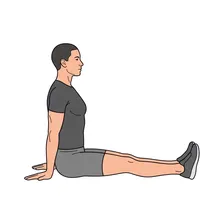
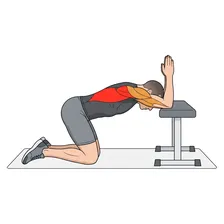
For example: Wall chest stretch · Shoulder extension stretch, seated · Biceps stretch, standing.
Train this exercise in Tamadu – with a plan, set tracking and muscle balance, free and without an account.
Train in Tamadu