▶
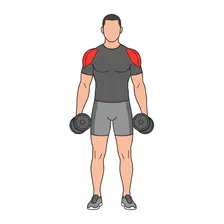
Stand tall with a dumbbell in each hand, arms slightly forward (about 30° in front of your sides, in a Y shape), thumbs pointing up, elbows almost straight.
 TamaduOpen app
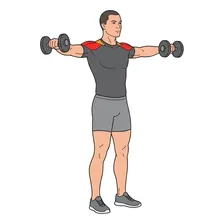
Raise your arms in the scapular plane (about 30° in front of your sides) with thumbs up. This movement is especially shoulder-friendly and activates the supraspinatus of the rotator cuff along with the delts.
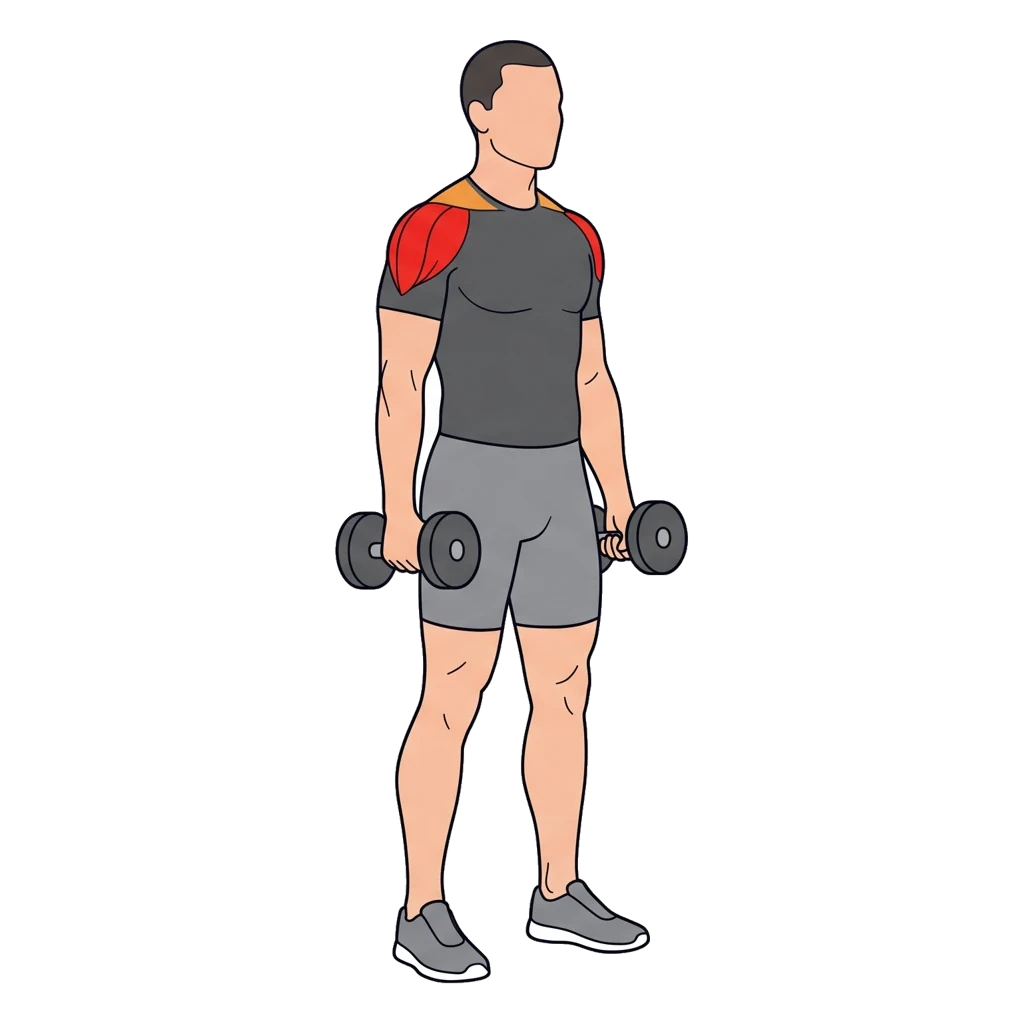
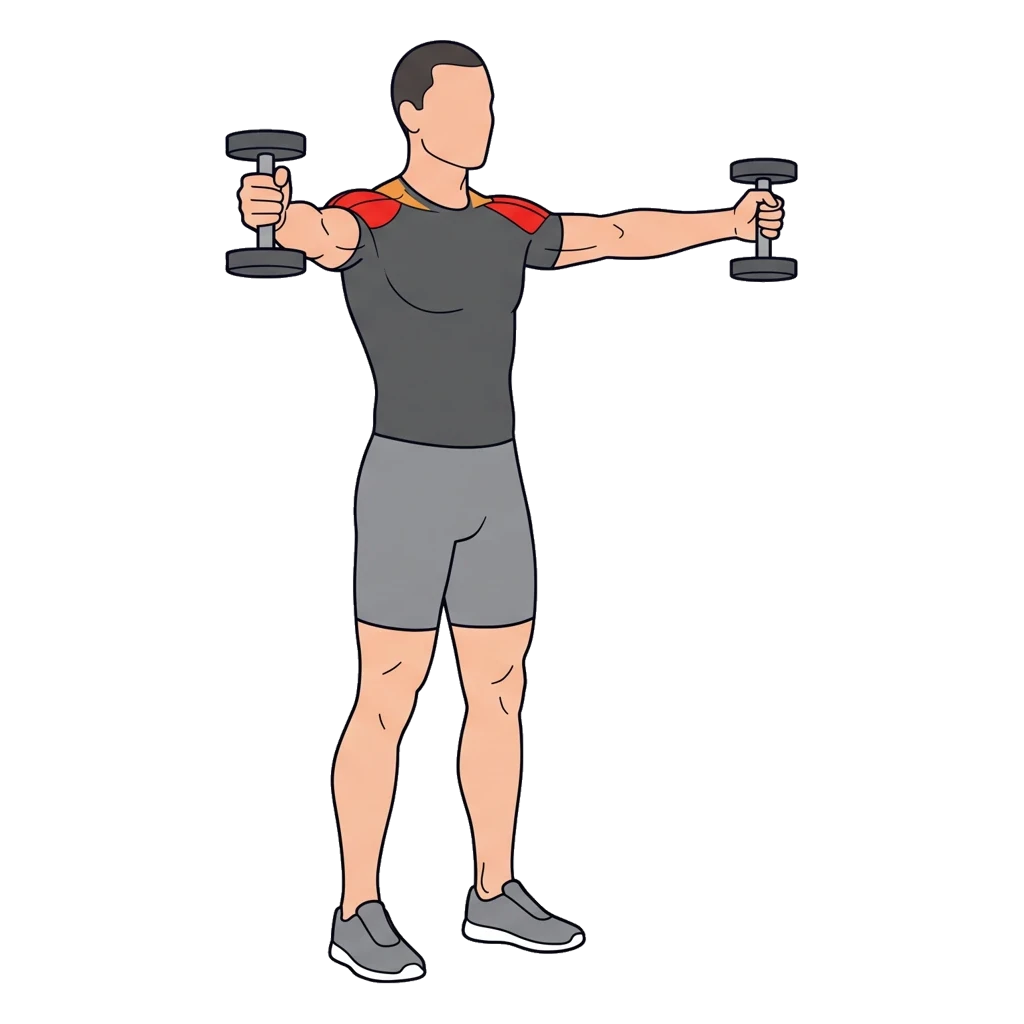
Mainly Shoulder. Secondary muscles: Trapezius.
You need: Dumbbell.
Yes, you only need: Dumbbell.
Exhale as you raise, inhale as you lower.
Raising above shoulder height – only go to horizontal, which protects the rotator cuff. Too much momentum from hips and torso – lift the weight with your shoulders, don’t swing it up; go lighter instead.
Shoulder-friendly alternative to the classic lateral raise, also popular in rehab.
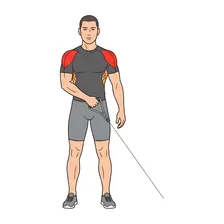
For example: Lateral raise (Dumbbell) · Lateral raise, one-arm (Cable machine) · Lateral to front raise (Dumbbell).
Train this exercise in Tamadu – with a plan, set tracking and muscle balance, free and without an account.
Train in Tamadu