▶
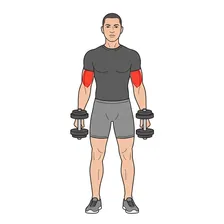
Stand upright with a dumbbell in each hand in an overhand grip (palms facing your thighs), arms straight, elbows at your sides.
 TamaduOpen app
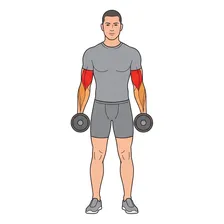
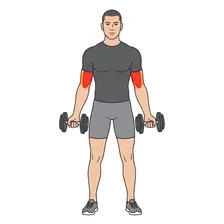
Curling with an overhand grip (palms down). This emphasizes the brachialis and the upper forearm (brachioradialis) and strengthens the forearm extensors; the biceps only assists.
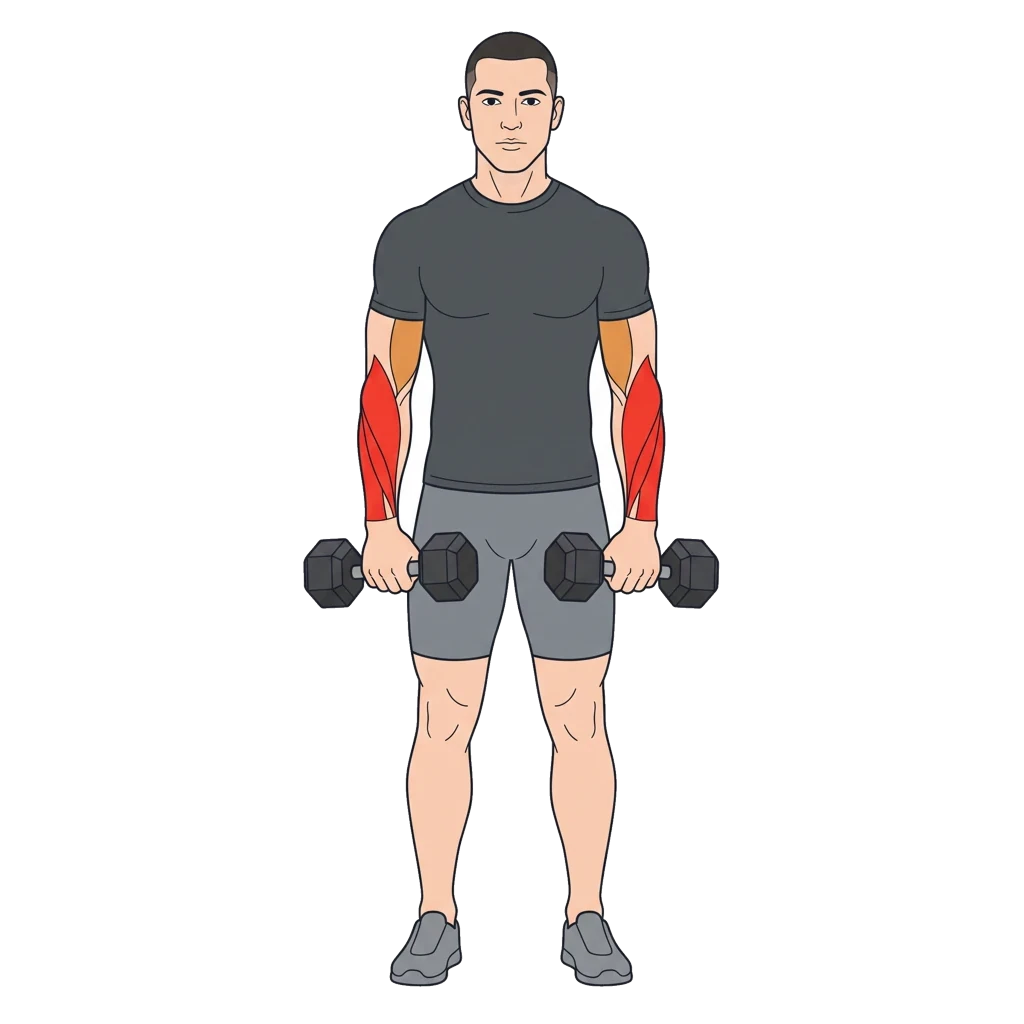
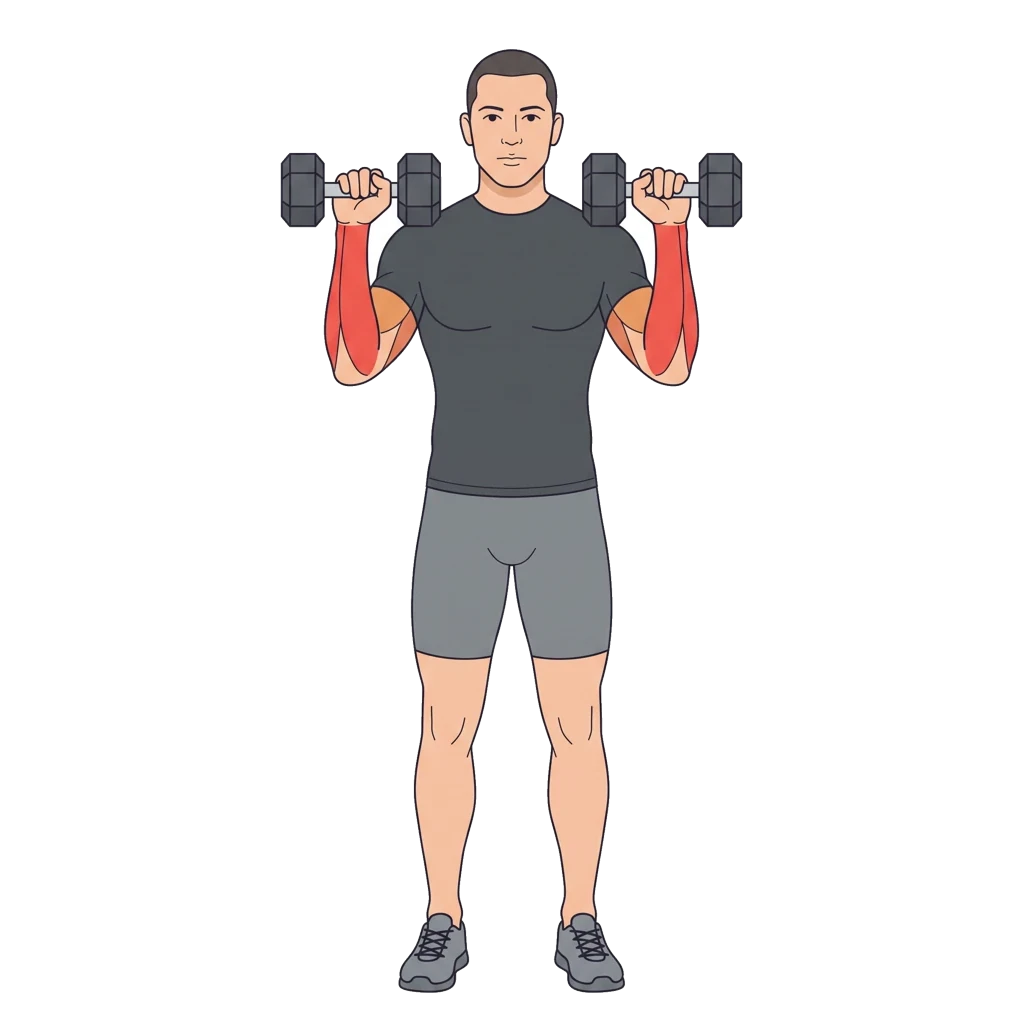
Mainly Upper-arm flexor, Forearm. Secondary muscles: Biceps.
You need: Dumbbell.
Yes, you only need: Dumbbell.
Exhale as you curl up, inhale as you lower.
Wrists bend back – keep them straight and stable. Elbows drift forward and swing – keep your elbows close to your body; only your forearms move.
Emphasizes the forearms and brachialis – good for strong forearms.
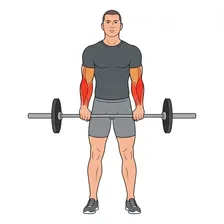
For example: Hammer curl (Dumbbell) · Hammer curl, cross-body (Dumbbell) · Reverse curl (Barbell).
Arms - dumbbells · Level 3.
Train this exercise in Tamadu – with a plan, set tracking and muscle balance, free and without an account.
Train in Tamadu