▶
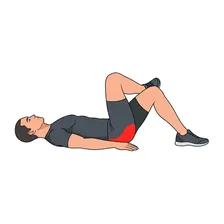
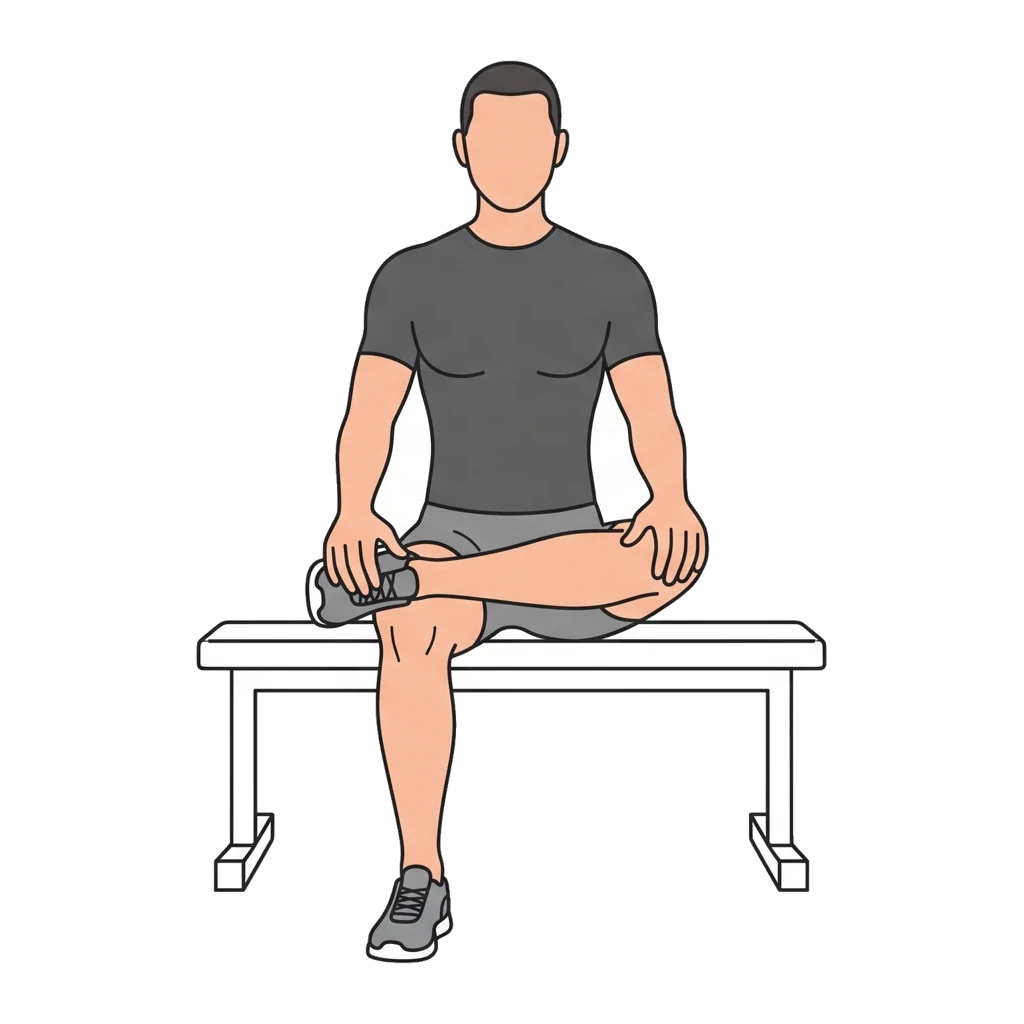
Sit upright on a chair or bench and place one ankle on the opposite knee (your leg forms a 4).
 TamaduOpen app
Stretches the glutes and piriformis by placing one ankle on the opposite knee while sitting (a figure-4 shape). Good for tight glutes and sciatic discomfort.
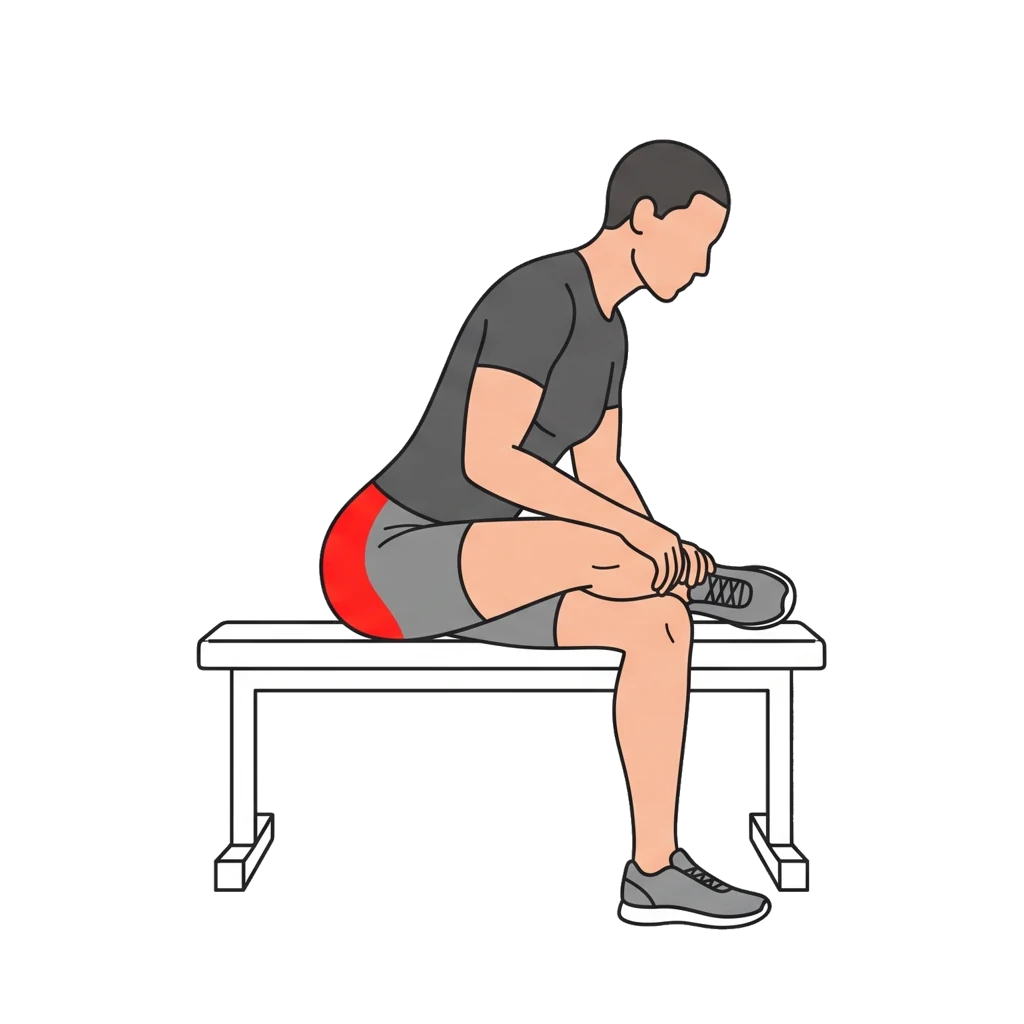
Mainly Glutes.
No equipment – your bodyweight is enough.
Yes, without any equipment – your body weight is enough.
Hold the stretch calmly for 20–30 seconds while breathing deeply (no bouncing). It should be noticeable but not painful. Then switch sides.
Yes. The exercise is done one side at a time – train both sides equally.
Mainly in: Glutes.
Rounded back – hinge from the hips, keep your back long. Forcing the knee down – only gently, within a comfortable range.
Easy to do sitting down (even at your desk) for tight glutes.
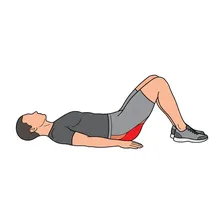
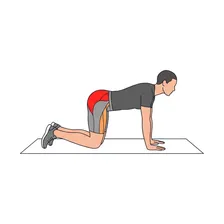
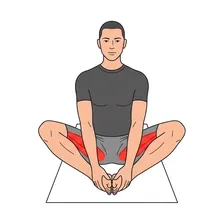
For example: Figure four stretch, lying · Knee to chest stretch · Pigeon stretch.
Train this exercise in Tamadu – with a plan, set tracking and muscle balance, free and without an account.
Train in Tamadu